
The Spanish Mosque in Chefchaouen: Between colonial history and a legendary panorama
Overlooking the blue medina from its hilltop, the Spanish mosque in Chefchaouen embodies a fascinating paradox: a religious building that has never really been used for worship, it has become one of the most photographed viewpoints in Morocco. Also known as the Bouzafar Mosque, this unusual monument tells a little-known story from the history of the Spanish Protectorate in the Rif.
A mosque that isn’t really a mosque
Built in the 1920s during the Spanish Protectorate in northern Morocco, the Spanish Mosque has never witnessed the daily bustle of the five daily prayers. Its history is closely linked to that of the conquest of Chefchaouen by Spanish forces in 1926.
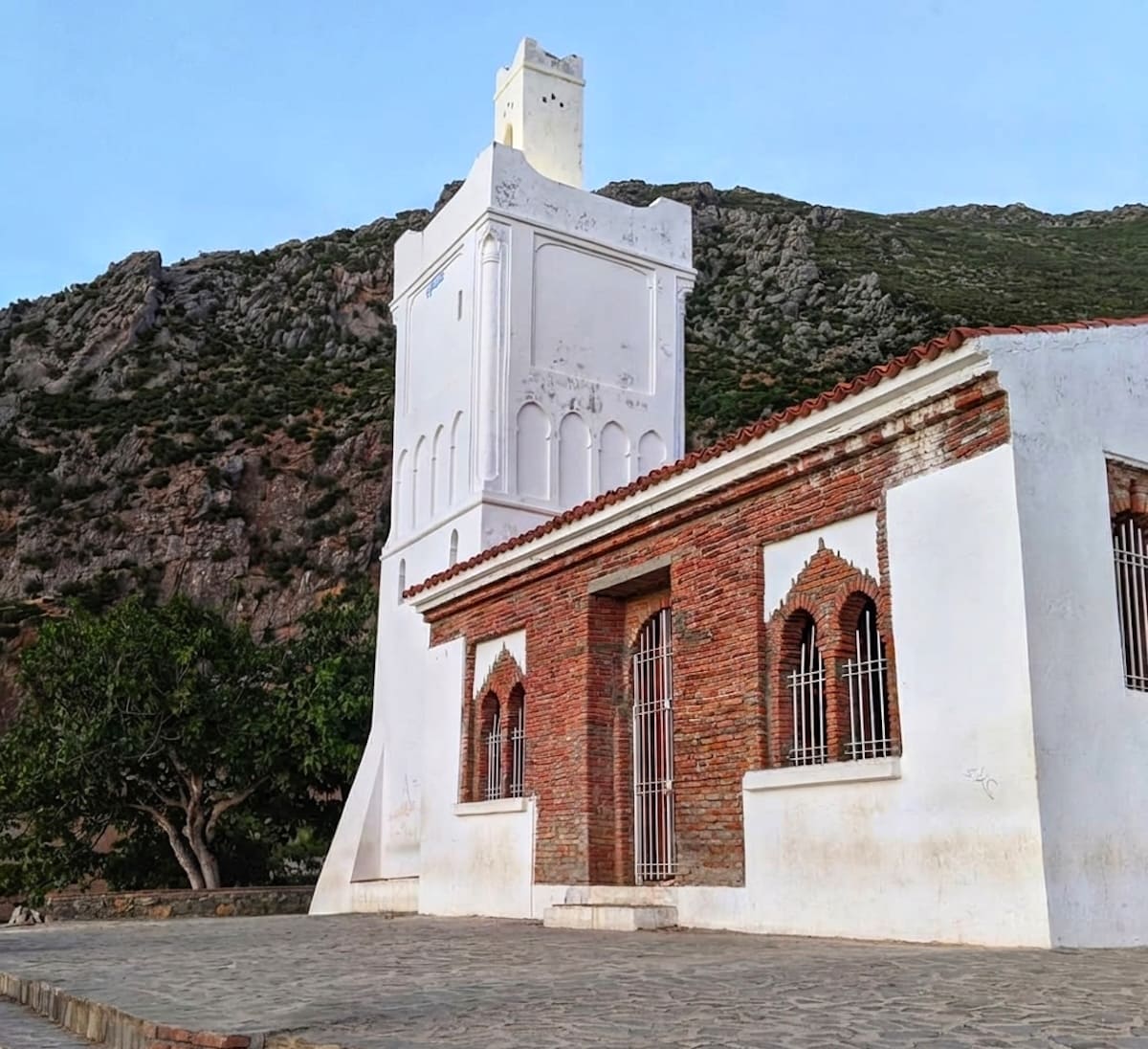
According to historical records, the building is said to have been erected on the orders of the Spanish officer Fernando Cabas, governor of the newly conquered city. The aim was clear: to consolidate the colonial presence through a network of administrative, educational and religious facilities intended to demonstrate the ‘development’ brought about by the occupying power.
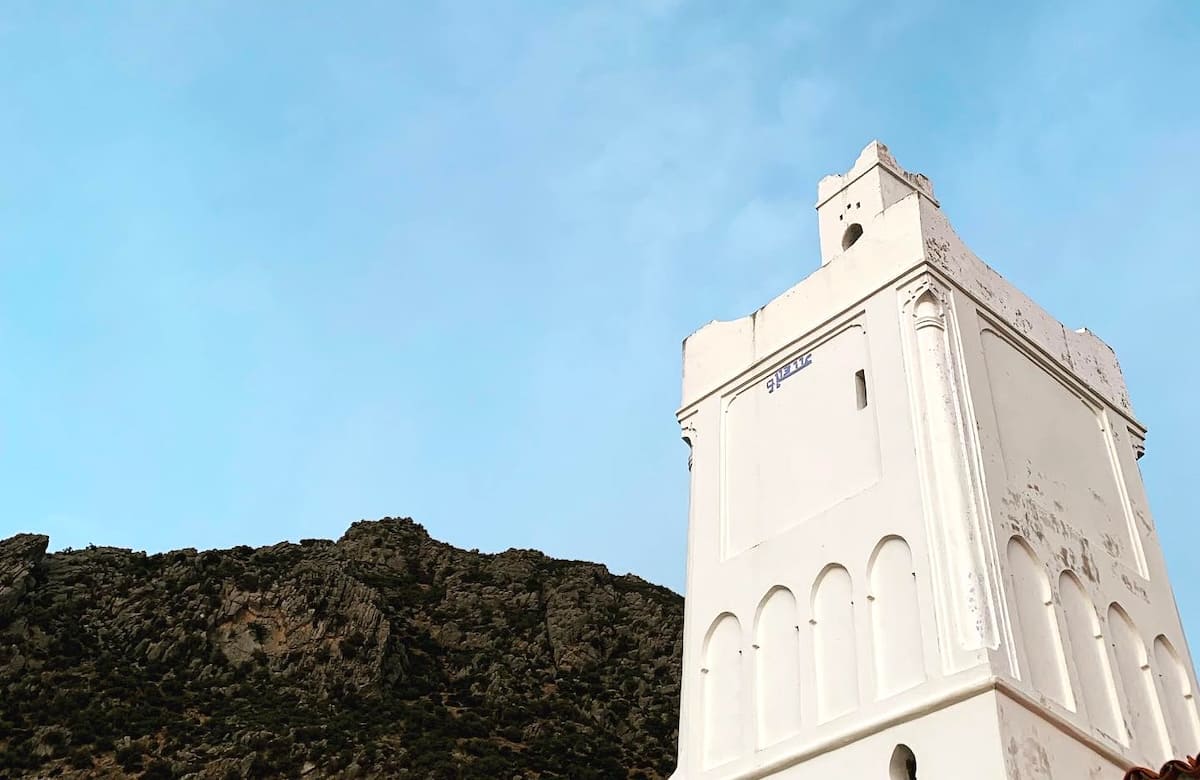
But this mosque harbours a fundamental contradiction. Its architecture immediately betrays its European origins: the minaret is more reminiscent of a church steeple, whilst the overall layout deviates from the canons of Moroccan religious architecture. This peculiarity did not escape the inhabitants of Chefchaouen, who never truly adopted the site for their prayers.
The finest view of Chefchaouen
Today, the Spanish mosque has found a new purpose, far removed from its original function. It has become the unmissable vantage point from which to admire the Blue City in all its splendour.
From the hill, the view is breathtaking: the azure roofs of the medina spread out at your feet, forming a mosaic of blues ranging from turquoise to cobalt. In the background, the Rif Mountains cast majestic silhouettes that change colour with the time of day and the season. In the distance, you can make out the lush green valleys that have made the region’s agricultural wealth.
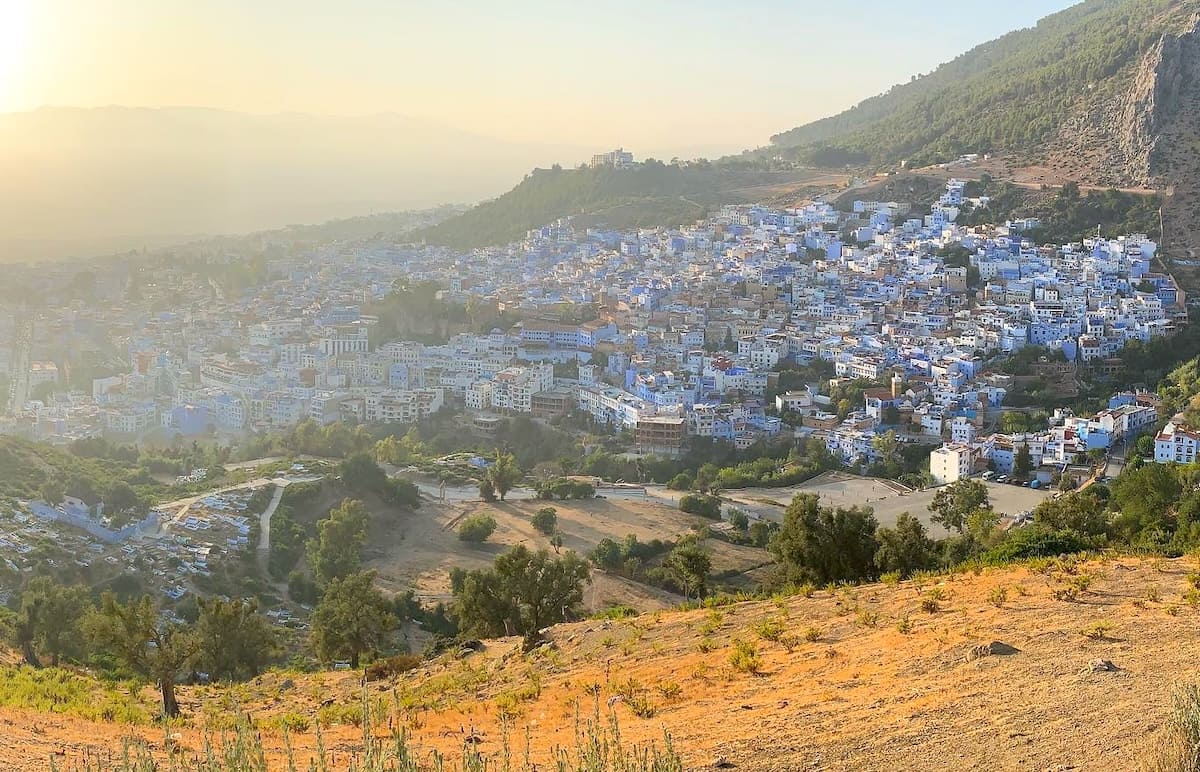
It is particularly at sunset that the site reveals its full magic. The golden light bathes the white and blue façades, creating striking contrasts as shadows lengthen across the winding alleyways. This daily spectacle attracts amateur and professional photographers from all over the world.
How to get to the Spanish Mosque?
The walk to the Spanish Mosque is a pleasant 20-minute stroll from the medina. The path starts at Bab al-Ansar, one of the city’s historic gates.
Recommended route: Start from Outa el-Hammam Square, the beating heart of the medina. Head towards Bab al-Ansar, following the narrow streets as they climb. Once through the gate, a well-marked path winds its way up the hillside. The climb is gradual and accessible to all, although a few sections require a minimum level of fitness.
The path first passes through a residential neighbourhood on the edge of the medina, then enters a wilder area where pine trees and Mediterranean vegetation line the trail. Signposts mark the route, making it easy to find your way even for first-time visitors.
Current condition of the monument
The mosque itself is in a state of varying preservation. Abandoned for decades, it bears the marks of time: cracked walls, peeling paint, and overgrown vegetation. Paradoxically, this controlled state of disrepair adds to its photographic charm, evoking the romantic ruins so beloved of 19th-century travellers.
The interior is generally off-limits for security reasons, but the outdoor esplanade is more than enough to enjoy the view. A few street vendors sell tea and refreshments, creating a friendly atmosphere as the day draws to a close.
Legends and mystery
The absence of worshippers and its hybrid architecture have fuelled local legends. Some locals speak of the ‘cursed mosque’, recounting tales of curses or ill omens associated with the site. These stories, passed down from generation to generation, have added a mysterious dimension to the building.
This notorious reputation could also be explained by the symbolic rejection of anything reminiscent of the Spanish occupation. For the proudly independent people of the Rif, this mosque, imposed by the occupiers, could not be considered a true place of worship.